


Evangelical circles have mass produced a get-out-of-jail-free card:
‘Not a primary issue.’
Should countries have open borders? Not a primary issue. Should women work outside of the home? Not a primary issue. Should we oppose abortion? Not a primary issue.
If we keep using that card, the Gospel shrinks and shrinks into abstraction, until there is nothing left connecting it to real life.1
On the other hand, culture warriors see Christianity as a tool for ‘saving the West’. Their approach subsumes the Gospel so that it becomes a small part of a larger social movement.2
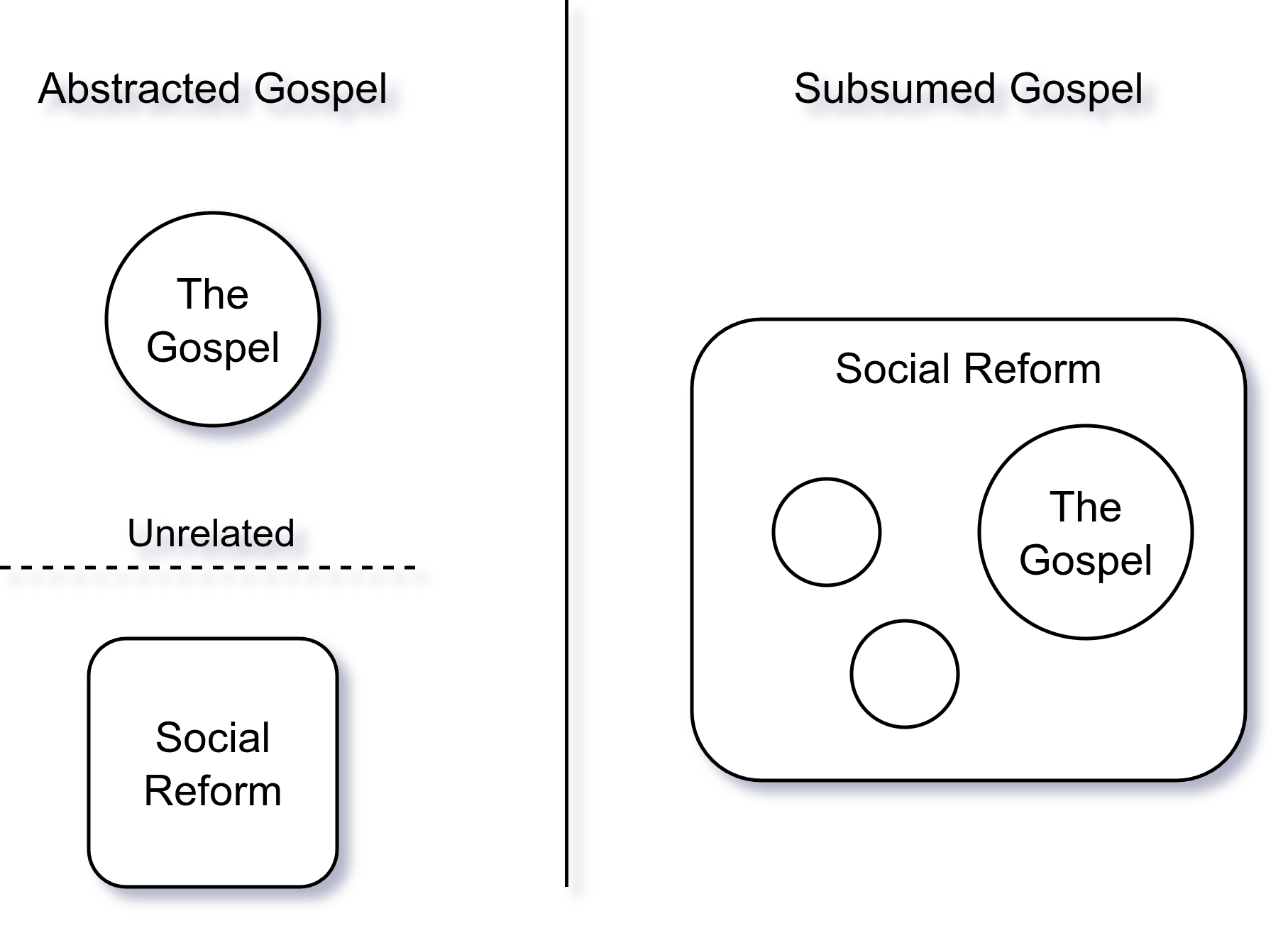
Both of these approaches contradict the Gospel. As we saw in our first article, the Gospel is Trinitarian: it has authority, power and presence.3
An abstracted Gospel denies God’s power and presence: it is reduced to a concept or ideal. Meanwhile a subsumed Gospel denies God’s authority: it is reduced to a method for exerting our own power and presence in this world.4
What is the solution?
In Scripture, we find a framework that relates the heavenly to the earthly:
No human being can tame the tongue. It is a restless evil, full of deadly poison. With it we bless our Lord and Father, and with it we curse people who are made in the likeness of God. From the same mouth come blessing and cursing. My brothers, these things ought not to be so.
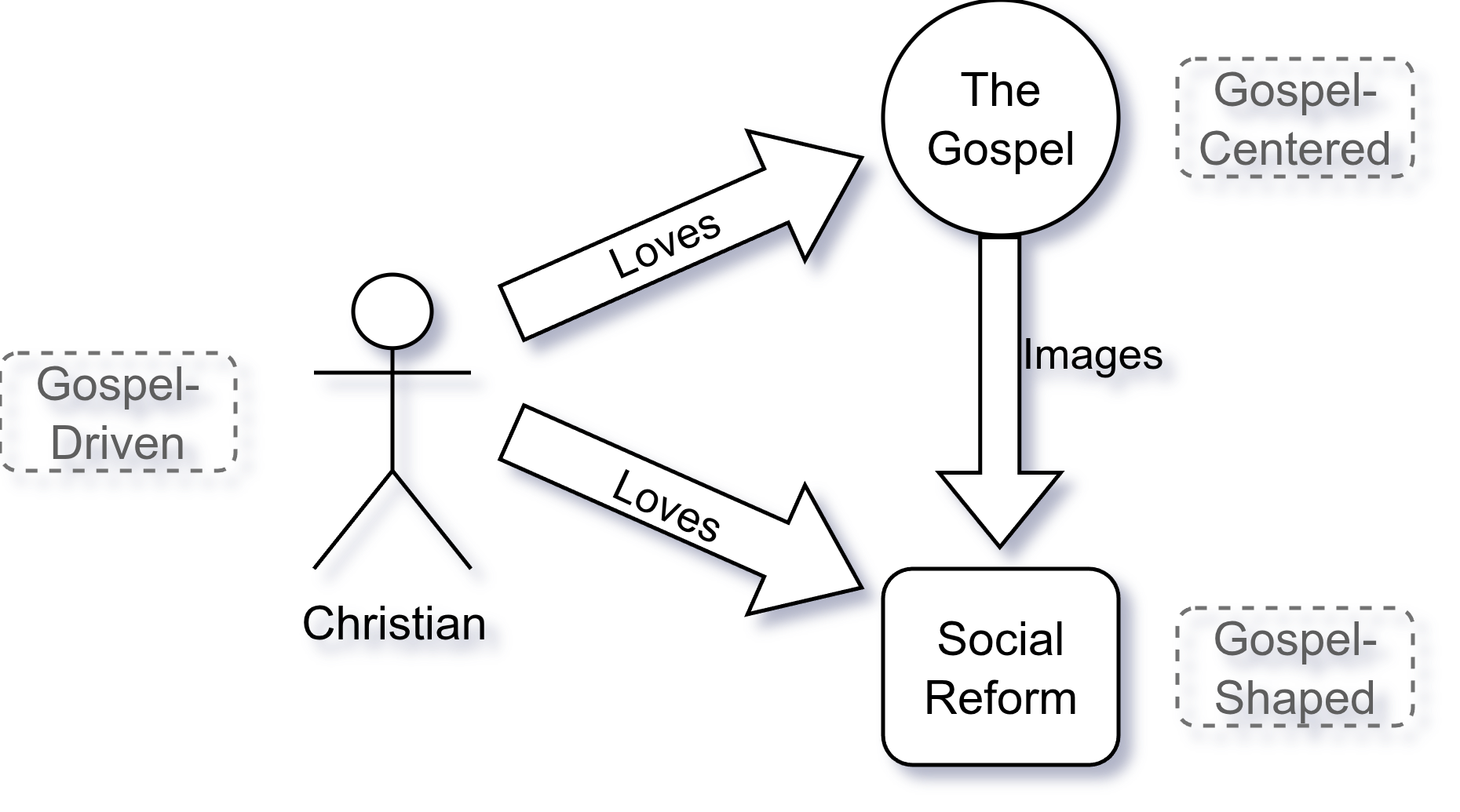
Fundamentally, the Gospel is not about us. It is about God. It is the good news of what God has done.5 The Gospel is about a heavenly reality.6 Meanwhile, social issues are an earthly reality. We wake up in the morning and decide how we will speak to our neighbours.
Yet James connects the two: the earthly reality is designed to be an image of the heavenly reality. We cannot love God while abusing something that looks just like him.
As we read the Bible, this same logic appears over and over again:
Earthly marriage is meant to be an image of Christ’s marriage to the Church.7
Earthly family is meant to be an image of Christ’s eternal family.8
Earthly work is meant to be an image of Christ’s work.9
Earthly government is meant to be an image of Christ’s government.10
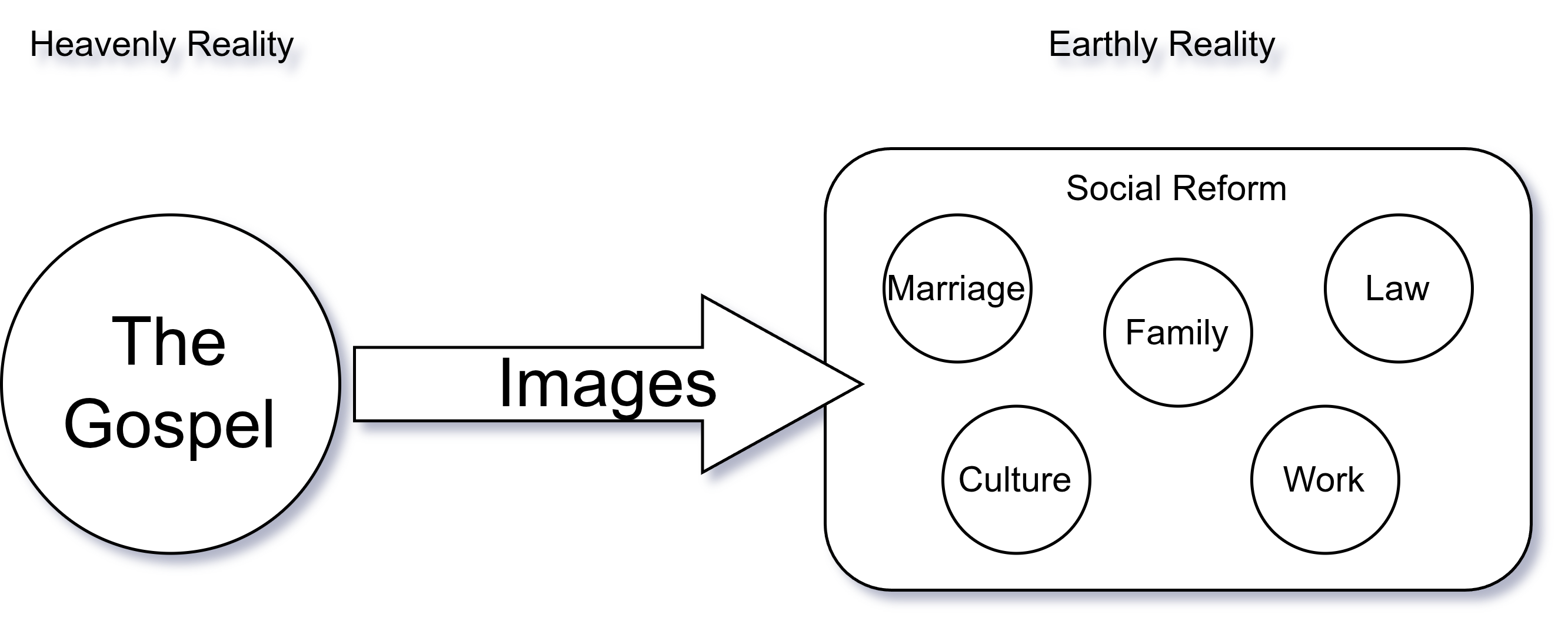
In other words, every part of society is meant to image the Gospel. Every part of life is meant to be Gospel-shaped.
If we love the Gospel, then we will reform (shape) each part of society until it perfectly images the particular aspect of the Gospel that it is designed to reflect.
We will rejoice when national borders are enforced - because Christ enforces the borders of his Kingdom. We will honour husbands who exert loving authority over their wives - because Christ exerts loving authority over his wife. We will applaud women who raise and teach their children - because Christ raises and teaches us, his children.
Conversely, we will not feel embarrassed when wives submit to their husbands. We will not seek to lessen due punishments for criminals. We will not apologise for hiring men in the workplace. We will not be ashamed of establishing a Christian culture.
We will not pretend to love the Gospel, while hating its images.
Thoughtful Reformed
This is a form of antinomianism.
Remember that these three aspects of the Gospel reflect the Father, the Son and the Spirit, respectively:

In both cases, to deny one or more aspect of the Gospel means you deny the entirety of it. You cannot remove one or two persons of the Trinity without losing the Trinity as a whole. Our God is one and many.
‘Now I would remind you, brothers, of the gospel I preached to you, which you received, in which you stand, and by which you are being saved, if you hold fast to the word I preached to you— unless you believed in vain.
For I delivered to you as of first importance what I also received: that Christ died for our sins in accordance with the Scriptures, that he was buried, that he was raised on the third day in accordance with the Scriptures, and that he appeared to Cephas, then to the twelve.’ (1 Corinthians 15:1-5)
Some might object to a description of the Gospel as ‘heavenly’ since it recounts events that took place on earth. Here I use ‘heavenly’ as shorthand for ‘part of God’s perfect kingdom’.