


How would you feel if?
Your doctor said: ‘Rest on the Sabbath, as God commands.’1
Your science teacher said: ‘Open your Bibles, today we are learning how God created animals.’2
Your politician said: ‘We are instating the death penalty for murder, as God commanded.’3
Would you be uncomfortable? Would you think of excuses to get God and the Bible out of the picture?
‘Believing in Jesus is a private choice.’
‘You cannot make people behave like Christians.’
‘The Bible is a religious text, not a science textbook.’
These objections embody secularism, which excludes religion from the public sphere. Secularism relegates religious beliefs to your ‘private life’, while establishing other authority structures for your ‘public life’.
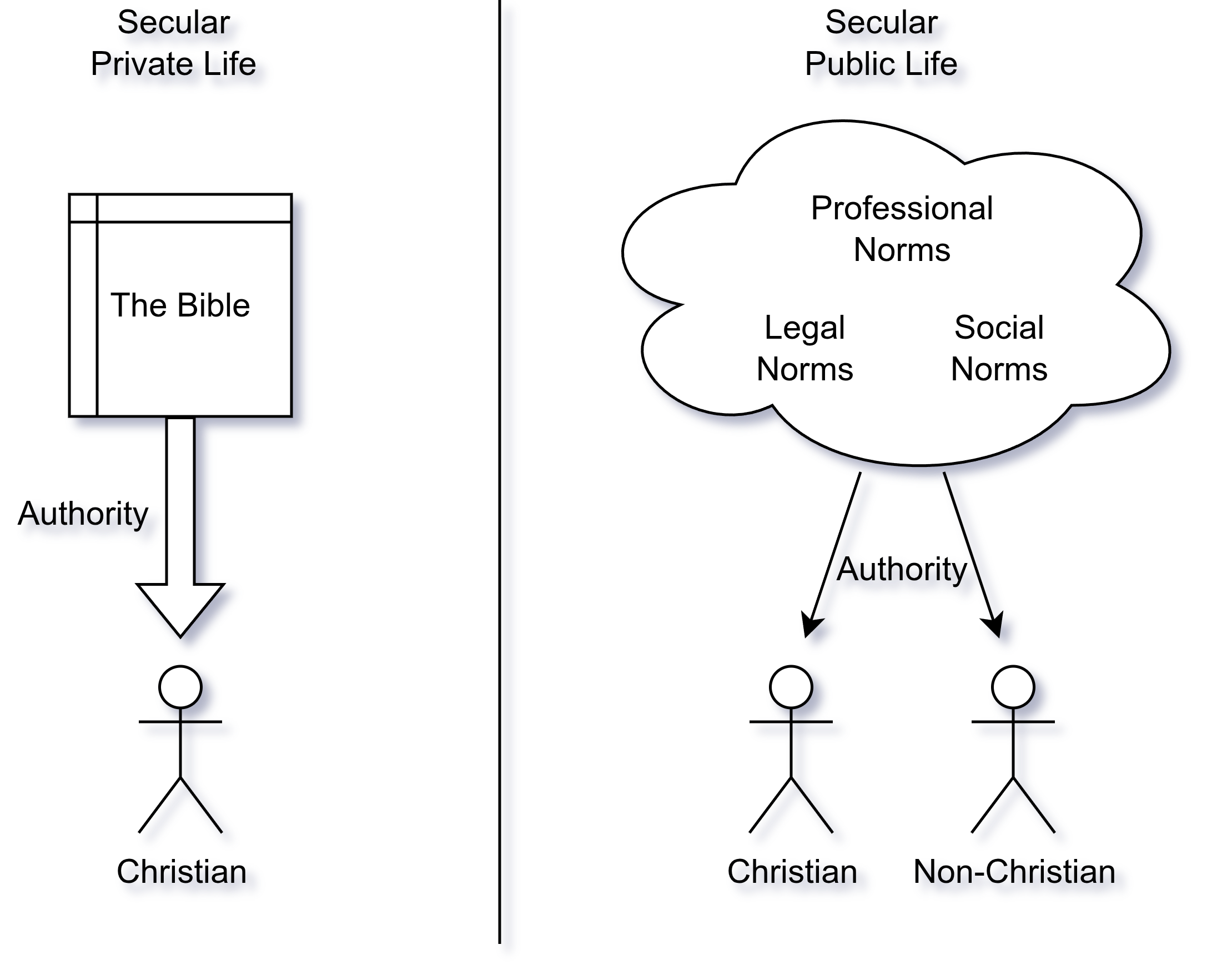
Jesus is Lord
Does the Gospel have something to say about secularism?
As we saw in our previous article, the Gospel has the power to shape society.4 When we see the glory of the Gospel, we reform every area of life to reflect it.5
At the heart of the Gospel is a man who exerted his rightful authority in the world, by obeying God’s words:
‘I can do nothing on my own. As I hear, I judge, and my judgment is just, because I seek not my own will but the will of him who sent me.’ (John 5:30)
Jesus Christ did not shy away from exerting authority: he commanded his followers how to live,6 he publicly condemned religious leaders,7 he kicked thieves out of the temple.8 Jesus judged.
Meanwhile, Jesus never exceeded the authority that God gave him. He submitted to his earthly parents,9 he paid his taxes,10 he accepted his death sentence from an earthly court.11 He did nothing on his own.
Finally, Jesus lived according to every word that comes from the mouth of God.12 Each decision he made was based on and derived from God’s explicit laws in Scripture. He heard.
Jesus showed his glory by rightfully ruling according to God’s words.
Lord of Lords
Due to sin, we deviate from Jesus’ glory in this area.
Instead of judging, we abdicate and refuse to exert the authority God has given to us: fathers do not discipline their children, governments do not punish criminals, employers do not fire poor performers.
Instead of doing nothing on our own, we usurp and exceed the authority that God has given us: teachers act like parents, businesses control speech, medical doctors try to heal the soul.
Instead of hearing, we autonomously exert authority, according to our own standards: governments redefine marriage, schools teach atheistic science, business leaders do not pray together before making decisions.
Yet we cannot love Jesus’ exertion of biblical authority, while hating its image in ourselves. To be Gospel-shaped in this area means we will be driven to reflect the glory of Jesus’ authority.
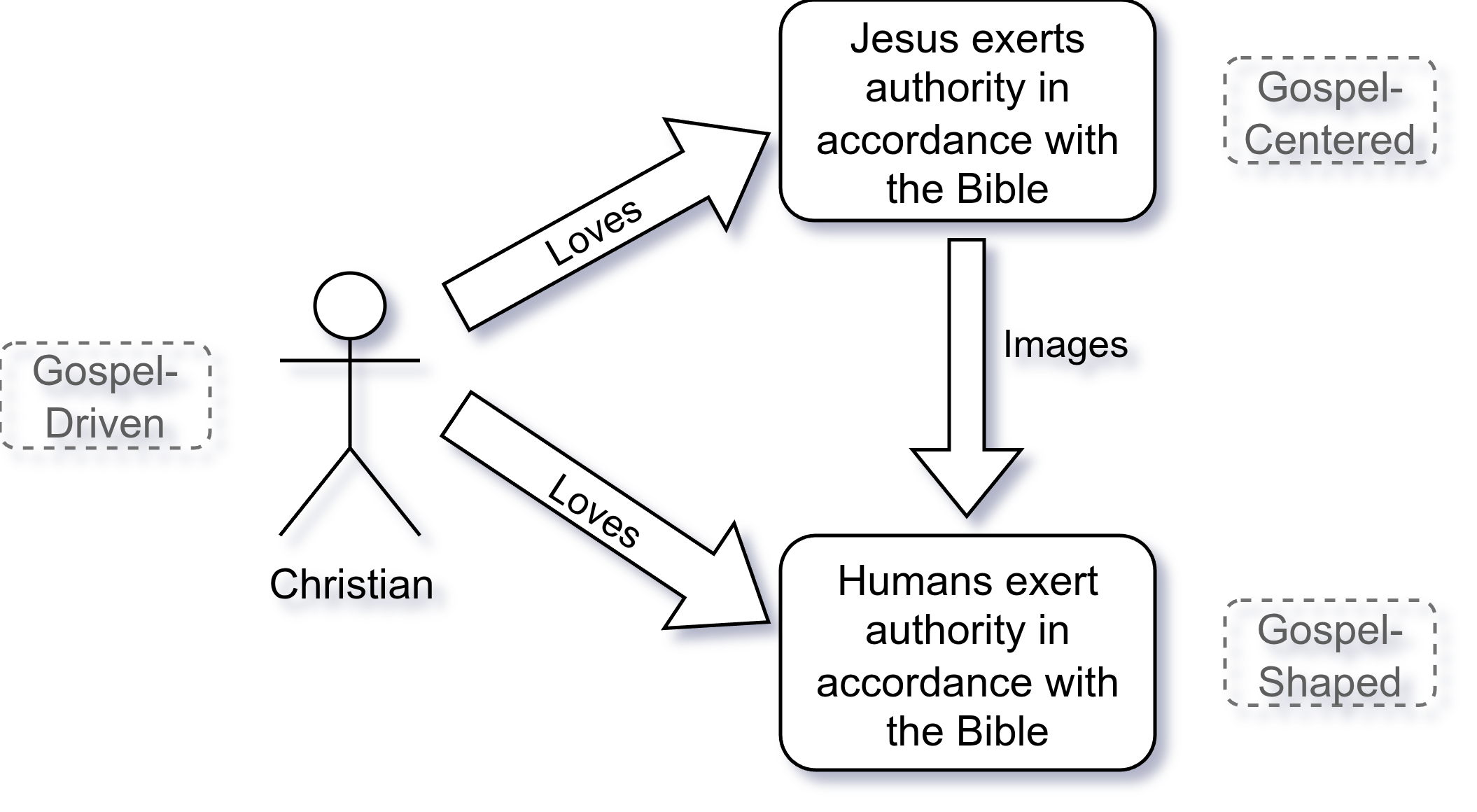
Jesus is Lord of lords, he is King of kings.13 He is building a Kingdom that is filled with subordinate kings, who image his own rule.14
What does this look like in practice?
Legislators pass laws based on and derived from the laws in Scripture. Scientists research according to the framework and facts found in Scripture. Financiers reform banking in accordance with Scripture’s laws on lending and interest. Medical doctors heal the body (not the soul) according to God’s design, as it is found in Scripture. Parents teach and raise their own children in the Christian faith, according to the pattern found in Scripture.
Secularism contradicts the Gospel. If we love the Gospel, then we will hate secularism. If we love the Gospel, then we will exert rightful authority in this world, to bring it into submission to the Bible.
Thoughtful Reformed
‘His divine power has granted to us all things that pertain to life and godliness, through the knowledge of him who called us to his own glory and excellence.’ (2 Peter 1:3)
‘[You] have put on the new self, which is being renewed in knowledge after the image of its creator.’ (Colossians 3:10)